Clinical
Operation Theatre
The operating list per theatre, the team, the pre-operative orders; the WHO surgical safety checklist as nineteen named items read aloud in three phases; two independent counts before closure; the operative note signed and locked; consumables and implants charged; theatre utilisation measured.
For:Theatre nursesSurgeonsAnaesthetistsTheatre manager
Where:Surgery › Surgeries · Theatres · Theatre Utilisation · Configuration › Safety Checklist
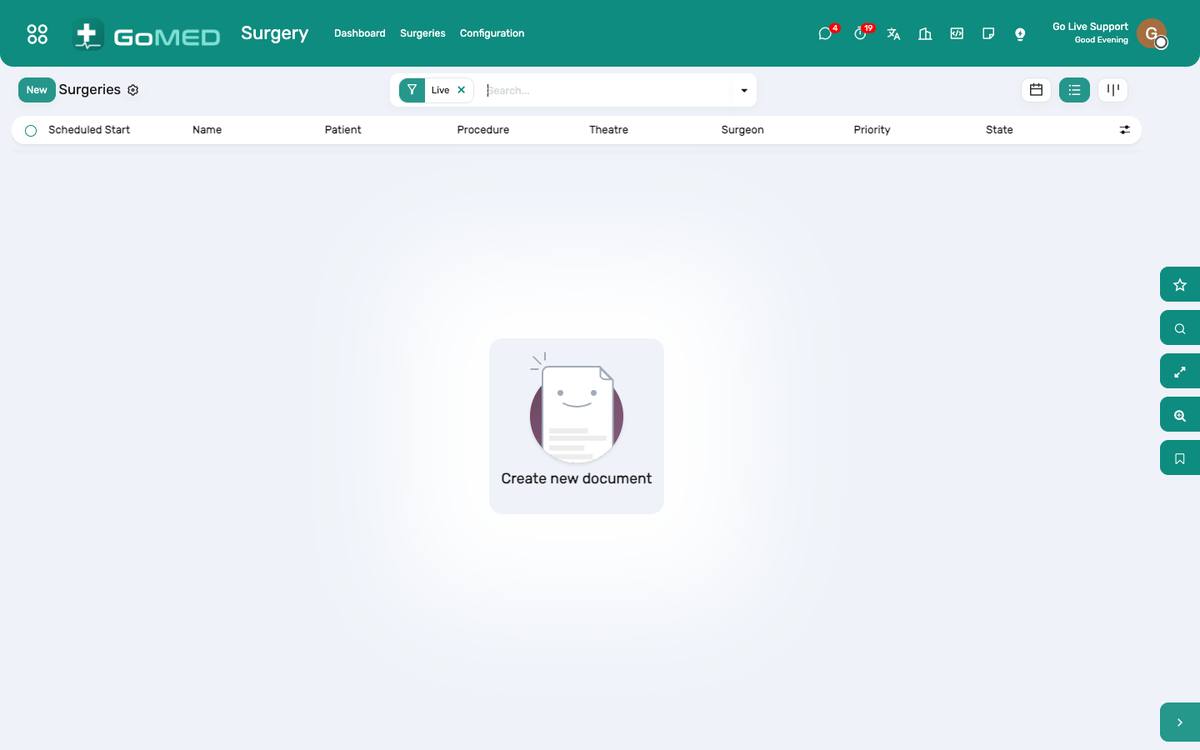
The operating list per theatre and day.
The surgery: team, checklist, counts, the record and the charges.
Before you start
- Theatres
- Surgery › Configuration › Theatres: rooms and their sessions.
- Checklist items
- Surgery › Configuration › Safety Checklist: the nineteen WHO items ship; edit the wording or add local items. Items marked “read aloud” exist to be said, not ticked.
How to
Schedule an operation
- Surgery › Surgeries › New: patient, procedure (from the service catalogue), surgeon, anaesthetist, theatre, date and planned duration, urgency.
- Pre-operative orders (bloods, imaging, consent) are raised from the surgery; the consent shows on the surgery once signed.
- Confirm; it appears on the theatre’s list.
Run the safety checklist
- On the day, Build the checklist on the surgery (once).
- Sign In — before induction: the nurse reads each item aloud; the team confirms; tick Checked (or N/A with a note). Click Sign In when the phase is complete; an incomplete phase is refused and names what is missing.
- Time Out — before skin incision: introductions by name and role; patient, site and procedure confirmed aloud by surgeon, anaesthetist and nurse; critical steps, blood loss, antibiotics, imaging. Click Time Out.
- Sign Out — before the patient leaves: the procedure name confirmed aloud, the counts complete, specimens labelled and read back, equipment problems, recovery concerns. Click Sign Out.
Count sponges, needles and instruments
- Counts tab: the opening count by two different people (the same person twice is refused).
- Before closure: the closing count by two people; it is compared with the opening count.
- A mismatch keeps the patient in the room: recount, or a surgery manager releases it with a reason (X-ray clear, item accounted for). The reason prints on the operative report.
Write and sign the operative note
- Procedure note, findings, post-operative diagnosis, complications, wound class (I clean to IV dirty).
- Sign the operative note: it is locked. Only a surgery manager can reopen it, and the previous text is kept in the chatter.
Charge consumables and implants
- Consumables tab: items issued from the theatre store are charged to the patient; implants with lot and serial.
- Theatre time and the surgeon’s and anaesthetist’s fees are captured for the bill and the doctor statement.
Cancel an operation and measure utilisation
- Cancel with the reason (patient unfit, no bed, surgeon unavailable, theatre or equipment, previous case overran, anaesthetic reason).
- Surgery › Theatre Utilisation: scheduled against actual minutes per theatre and day, turnover between cases, cancellations by reason.
See also: Admissions & Bed Board Certificates & Consents Bills, Charges & Cashier Ambulance, Diet, Housekeeping, CSSD & Mortuary